
 By
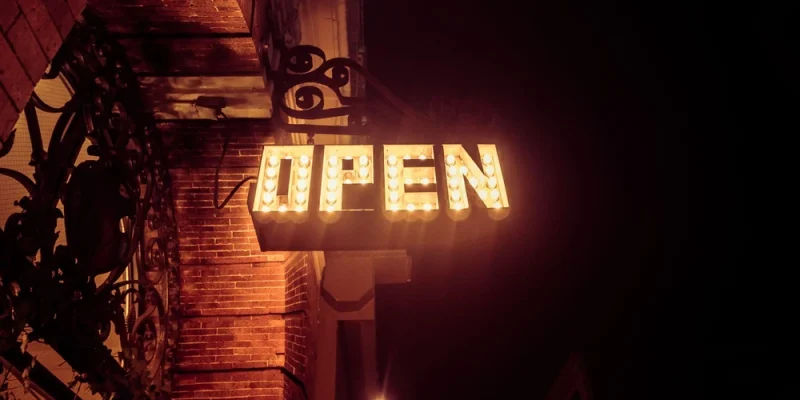
Walking past a row of shopfronts after dark, most lit signs blend together as a soft, even glow. Then one stands out for the wrong reason: a faint row of bright dots visible through the letter itself, like someone left the bulbs showing through tissue paper. It’s a small detail, easy to miss unless it’s pointed out, but it’s also the clearest sign that something in the fabrication was rushed or skipped rather than tested properly before installation.
The Gap Between the Letter and the Wall Decides How the Light Lands
When a signs company builds a backlit or halo-lit letter, the LEDs usually sit on standoffs behind the letter face, projecting light onto the wall or glowing through the acrylic itself. How far those standoffs hold the letter off the surface changes everything about the result. A shorter standoff gives a tight, crisp glow that suits small lettering viewed up close, while a deeper standoff spreads the light into a softer halo that works better on larger letters or signs mounted above eye level. Get that distance wrong relative to the letter’s size, and the light either barely spreads at all or blows out into an uneven blur.
The direction the LEDs actually point matters just as much as the distance. Diodes aimed into the letter face scatter the light before it reaches the viewer, while diodes aimed straight at a glossy mounting surface can bounce back a reflection of the individual LEDs themselves, which is exactly the dotted effect that gives a rushed sign away at night.
How Far the Light Typically Needs to Sit From the Letter Face
| Letter size | Typical standoff distance | Resulting glow |
| Small letters, viewed up close | Roughly 1 centimetre | Tight, crisp edge |
| Larger or deeper letters | Up to about 6 centimetres | Softer, broader halo |
| Letters mounted above eye level | On the longer end of that range | Even spread at a distance |
The Acrylic Nobody Sees Does Most of the Actual Work
Choosing acrylic signage often focuses on the face, the colour, the finish, the lettering someone will actually read from the street. The acrylic that quietly fixes the dotted-light problem, though, is the piece almost nobody thinks to ask about: an opal or diffuser-grade acrylic backing fitted behind the letter, between the LEDs and the visible face. That layer scatters the light evenly before it ever reaches the surface people are looking at, which is the difference between a smooth glow and a row of visible bulbs.
Letter depth plays into this too. A shallow letter can usually get away with a single LED string run down the middle, but anything deeper than about 8 to 10 centimetres tends to need two strings spaced across the depth; otherwise, the middle of the letter ends up noticeably dimmer than the edges. None of this shows up on a design mockup. It only becomes visible once the sign is actually lit and mounted, which is exactly why it’s worth asking about before fabrication starts rather than after.
Ask to See This Before the Sign Goes Up
- Ask whether the letters will include an opal or diffuser backing, rather than just a plain clear or coloured acrylic face over the LEDs.
- For anything deeper than a shallow letter, ask how many LED strings are planned and where the mounting brackets will sit relative to the light path.
- Request a lit sample tested in the dark from a realistic viewing distance before the full sign is fabricated, not just a daytime mockup of the design.
Can an Existing Spotty Sign Be Fixed Without Remaking It?
Often, yes. If an already-installed sign shows that dotted glow, the usual fix is adding a diffuser backing into each letter after the fact rather than remaking the whole piece, provided the letters were built in a way that allows a back to be fitted. Where mounting locators or brackets were sitting directly in the light path, repositioning them, or rebuilding the backs to sit flush around them, generally clears up the unevenness without touching the visible face at all.
A sign that’s actually been tested lit, in the dark, from the distance it will usually be seen from, rarely needs this kind of fix later. It costs nothing extra to ask for that test before committing to the final build.
Sui Generis Neon can talk through standoff distance, backing material, and lighting layout for a specific sign before fabrication begins. Contact Sui Generis Neon to go over the details.





Comments