
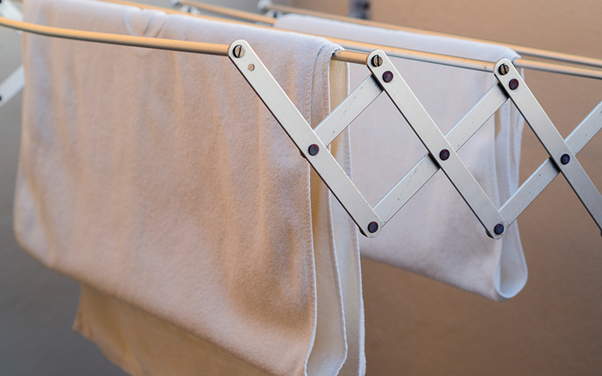
Smart home technology has expanded beyond lighting and security systems. Since the consumer demands for convenience continue to grow, smart laundry racks have also emerged as a noteworthy addition to the expanding list of home automation appliances.
These motorised systems, which are typically ceiling-mounted, allow users to lower or raise the rack using a remote, an app, or even voice commands. Some models also include UV sterilisation, fans for faster drying, and heat-assisted features.
While the concept appears convenient on the surface, many homeowners question whether the cost justifies the benefits. Assessing whether this product delivers genuine value or is merely a well-packaged luxury is necessary in busy households, where efficiency is key.
Assessing Time Efficiency
The most frequently cited advantage of smart laundry racks is time-saving. In reality, the automation mainly reduces physical strain rather than drying time. Users can avoid lifting heavy poles or tiptoeing to hang laundry, especially in homes with high ceilings or limited access to balconies. Some premium models integrate fans and heaters to accelerate the drying process, which could be helpful in humid climates or during rainy seasons. However, the time saved is incremental compared to using traditional wall-mounted or foldable racks. The reduced effort in handling and lifting may accumulate into meaningful convenience, especially for elderly occupants or working parents managing daily chores.
Space Optimisation in Urban Homes
Due to the shrinking flat sizes in urban areas, particularly in cities like Singapore, space-saving designs are becoming essential. A ceiling-mounted smart laundry rack frees up floor space and allows better movement in compact service yards or utility areas. Unlike traditional racks that occupy valuable square footage or obstruct pathways, automated racks retract neatly when not in use. From a practical standpoint, this feature aligns with the core objectives of home automation appliances: enhancing functionality in space-limited settings. The return on investment here is more pronounced in BTO flats, condominiums, or resale apartments with tight utility zones.
Cost Considerations and Maintenance
Smart laundry racks range in price from SGD 300 for basic motorised systems to over SGD 1,000 for advanced models with multiple features. While the upfront cost is significantly higher than manual laundry racks, the long-term value depends on usage frequency, household size, and lifestyle. The rack could pay off in terms of time saved and convenience for families doing laundry several times a week. However, ROI becomes less compelling for small households or those who rely heavily on dryers. Maintenance is another aspect often overlooked. Motorised systems include moving parts, sensors, and circuit boards that may require servicing or replacement. These racks may malfunction and incur additional costs if poorly maintained, negating potential savings.
Integration with Other Home Automation Appliances
The effectiveness of a smart laundry rack improves when integrated into a broader smart home ecosystem. Some systems allow app-based control, schedule settings, or link to smart assistants like Google Home or Amazon Alexa. Integration can enable functions such as automated lowering of the rack during specific hours or sending alerts when drying is complete. While such features are beneficial, they are only useful if homeowners already use compatible home automation appliances. Otherwise, the isolated functionality of a standalone smart rack may feel underwhelming relative to its cost.
Is It Worth the Investment?
A smart laundry rack can provide measurable convenience, reduce physical strain, and improve spatial efficiency for busy households, particularly those with limited space or elderly members. Once factored into an existing home automation setup, its utility increases through system integration. However, its ROI is closely tied to user habits, home layout, and willingness to perform regular upkeep. The benefits may not outweigh the investment for households with minimal laundry loads or ample space for conventional drying methods. During such cases, the product leans more towards a lifestyle upgrade than a practical necessity.
Contact Homino and explore smarter living through connected, practical solutions today.