
 By
By 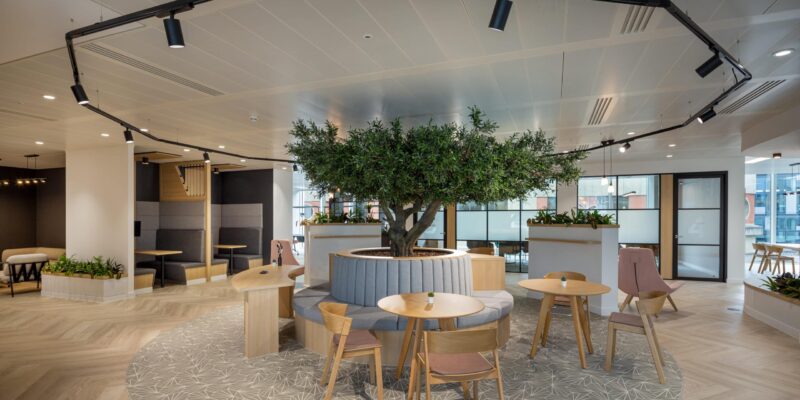
Hybrid work sounds simple on paper. People split time between home and office, and everything just “adapts.”
In reality, many offices struggle with it.
Some spaces feel empty half the week and overcrowded the rest. Others look modern but don’t actually support how people work anymore. That’s why more businesses in Johor Bahru are rethinking office design from the ground up.
Because hybrid work isn’t just a policy shift, it’s a space design problem.
Here’s what actually works when designing offices for hybrid teams.
1. Stop designing around desks, design around activities.
Traditional offices were built around assigned desks. Hybrid offices aren’t.
Today, people come into the office for specific reasons:
- Meetings
- Collaboration
- Focused work (when home isn’t ideal)
That’s why modern hybrid offices use activity-based design:
- Quiet zones for deep work
- Collaboration areas for team sessions
- Casual spaces for informal discussions
This mix is essential because not every task needs the same environment. Instead of rows of desks, the office becomes a toolkit for different types of work.
2. Reduce fixed desks and embrace flexible seating.
One of the biggest inefficiencies in hybrid offices is empty desks.
Since not everyone is in the office every day, many companies are:
- Reducing desk-to-employee ratios
- Introducing hot-desking or shared seating
- Using booking systems for desks
This allows better use of space while giving employees flexibility.
In practical terms, this means:
- Fewer permanent desks
- More adaptable workstations
- A layout that can shift based on daily needs
3. Prioritise collaboration spaces over individual workstations.
Hybrid work changes why people come to the office.
They’re no longer coming just to sit and work quietly. They’re coming to:
- Meet teammates
- Brainstorm ideas
- Build relationships
That’s why effective hybrid offices allocate more space to:
- Meeting rooms (various sizes)
- Open collaboration zones
- Social or breakout areas
In fact, many hybrid layouts now dedicate a larger percentage of space to collaboration than to desks.
If your office still looks like rows of workstations, it’s probably outdated.
4. Create proper quiet zones (not just “open space”).
Here’s where many offices get it wrong.
They reduce desks and add open areas, but forget about focus.
Without quiet zones:
- Noise increases
- Concentration drops
- Employees avoid coming in
What works better:
- Acoustic pods or small rooms
- Clearly defined silent areas
- Soft materials that reduce noise
Balancing collaboration and concentration is key to making hybrid work effective.
5. Make technology seamless, not an afterthought.
Hybrid offices fail quickly when tech doesn’t support them.
Common issues include:
- Poor video call setups
- Unequal experience for remote vs in-office staff
- Meeting rooms that don’t integrate well with digital tools
What actually works:
- Tech-enabled meeting rooms with screens, cameras, and audio
- Easy plug-and-play systems
- Reliable connectivity throughout the office
The goal is simple: remote and in-office employees should feel equally included.
6. Design for flexibility, not fixed layouts.
Hybrid work is unpredictable.
Some days the office is quiet. Other days it’s full.
That’s why flexibility is non-negotiable:
- Modular furniture
- Movable partitions
- Multi-use rooms
Spaces should be able to:
- Shift from meetings to workshops
- Expand or shrink based on team size
- Adapt over time without major renovation
Flexibility is one of the core principles of hybrid workplace design.
7. Think about why people would want to come in.
This is the question many offices overlook.
If employees can work from home, the office needs to offer something better.
That could be:
- Better collaboration opportunities
- A more comfortable environment
- Access to tools or spaces they don’t have at home
Modern hybrid offices are designed to attract people back, not force them. If the office doesn’t offer value, people simply won’t use it.
8. Include spaces for informal interaction.
Some of the most valuable work doesn’t happen in meetings.
It happens in:
- Casual conversations
- Quick catch-ups
- Unplanned interactions
Hybrid work reduces these moments, so offices need to bring them back intentionally:
- Lounge areas
- Café-style seating
- Open social zones
These spaces help rebuild team culture, which is often lost in remote setups.
9. Prioritise wellbeing and comfort.
Hybrid work has raised expectations around comfort.
If the office feels less comfortable than home, people won’t enjoy being there.
That’s why modern offices focus on:
- Ergonomic furniture
- Natural light
- Indoor plants or natural elements
Wellbeing is now a core part of workplace design, not just a bonus.
Why Some Hybrid Offices Still Fail
Even with good intentions, some offices don’t work because they:
- Keep old layouts and just reduce desks
- Ignore acoustics and noise control
- Underinvest in technology
- Don’t understand how teams actually work
Hybrid design isn’t about small tweaks. It’s about rethinking the entire purpose of the office.
Final Thoughts
Designing offices in Johor Bahru for hybrid work isn’t about making them look modern. It’s about making them worth using.
The most effective spaces:
- Support different types of work
- Adapt to changing needs
- Balance collaboration with focus
- Make people actually want to be there
When those elements come together, the office stops being just a workplace.
It becomes a space people choose to use, and that’s what makes hybrid work truly successful.


Comments